


Understanding the Differences Between Electric and Hydraulic Trailer Brakes
6/26/20262 min read
Introduction to Trailer Brake Systems
When it comes to towing, safety is paramount, and one of the key components that ensures the stability of a trailer is its braking system. Electric and hydraulic trailer brakes are the two primary types of braking systems found in trailers today. Each system has its unique features, advantages, and maintenance requirements. In this post, we will delve into the characteristics of both systems, the types of trailers that commonly utilize each, their maintenance needs, potential issues, and replacement intervals.
Electric Trailer Brakes
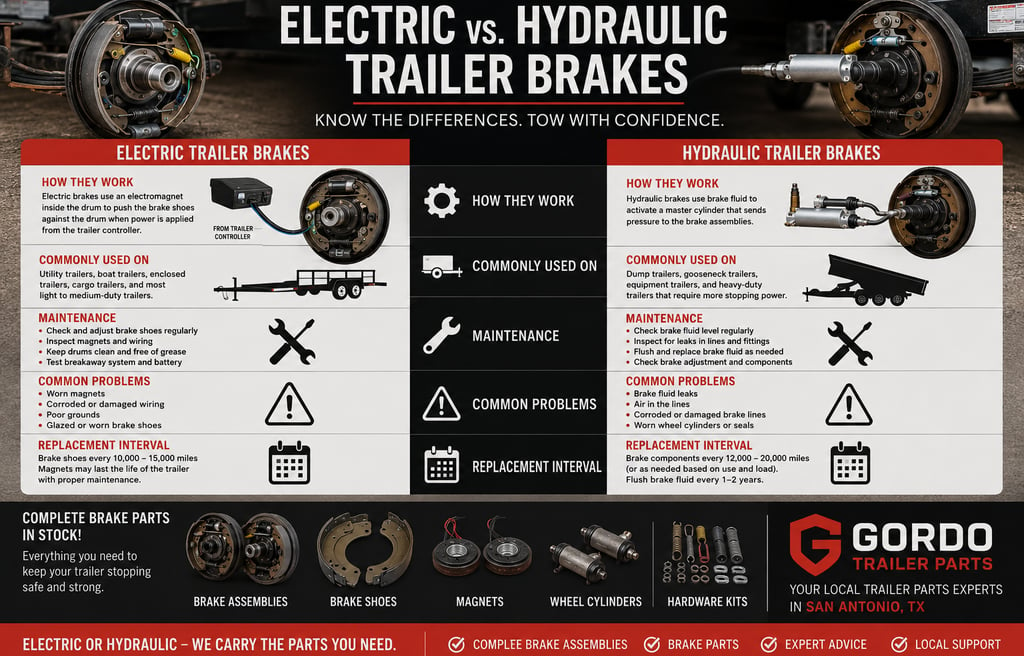
Electric trailer brakes operate through a simple yet effective mechanism. When the tow vehicle's brakes are engaged, an electric signal is sent to the trailer, activating the brake assembly. This type of braking system is commonly found on smaller trailers and is popular with light-duty vehicles, such as utility trailers and small boat trailers.
One of the primary advantages of electric brakes is the ease of installation and adjustment. They are also usually lighter than hydraulic systems, which can be beneficial for overall trailer weight. However, they require a special brake controller in the tow vehicle, and their performance can be affected by electrical issues such as corroded connectors or insufficient voltage.
Hydraulic Trailer Brakes
Hydraulic trailer brakes, on the other hand, utilize a fluid-based system to apply the brakes. When the tow vehicle's brakes are applied, brake fluid is sent down the lines to the trailer's brake assembly, engaging the brakes. This system is typically used for larger trailers, including travel trailers and heavy-duty equipment trailers, which require a more robust braking solution.
Hydraulic brakes are known for their superior stopping power and consistency, especially in heavy loads. However, they generally involve a more complex installation and maintenance process. Common issues with hydraulic brakes may include leaks in the brake lines and air bubbles in the brake fluid, which can compromise braking effectiveness.
Maintenance and Replacement
Both electric and hydraulic trailer brakes require regular maintenance to ensure safe operation. Electric brakes typically need their wiring checked frequently to prevent corrosion and ensure the controller is functioning correctly. The brake shoes should be adjusted periodically to maintain optimal braking performance.
Hydraulic brakes require regular inspection of the brake fluid levels and should have the fluid changed according to the manufacturer's recommendations. Brake lines should be examined for leaks, and the brake assembly should be inspected for wear and tear. Replacement intervals will vary based on usage, but a good rule of thumb is to check brake components at least once a year.
For those looking for reliable parts and complete brake assemblies in San Antonio, Gordo Trailer Parts offers a wide selection suitable for both electric and hydraulic trailer braking systems.
In conclusion, understanding the differences between electric and hydraulic trailer brakes will help you choose the right system for your trailer. By ensuring proper maintenance and being aware of potential problems, you can ensure a safer towing experience.
Your trusted source for trailer parts in San Antonio, dedicated to getting you exactly what you need—faster and better than anyone else—so you can get the job done with confidence! Serving Humble, TX as well.
Our Core values:
gtpofsanantonio@gmail.com
956-576-1969
© 2024. All rights reserved.
customer focus
Reliability
speed
faith-centered integrity
expertise
10427 Perrin Beitel Rd, ste 104, San Antonio, TX